You've got an idea. Maybe it's a small shop, a portfolio, a blog about your obsession with houseplants, or a page for your side project. Then comes the part where every guide starts throwing words at you: domain, hosting, DNS, SSL, CMS. You nod, close the tab, and decide to think about it next month.
Let's make it less scary. Putting a website online comes down to four things, and none of them needs a computer science degree.
What do you actually need to put a website online?
Think of it like opening a tiny shop on a street:
- A domain is your address, the thing people type in, like
yourname.com. - Hosting is the plot of land and the building. It's a computer that's always on, so your site is there whenever someone visits.
- The site itself is what's inside: your pages, photos and words.
- The finishing touches are the sign on the door and the doorbell: a favicon, readable colors, a contact page.
Once you see it like that, the jargon stops being jargon. Let's go through them in order.
Step 1: How do you pick a domain name?
A domain is basically rented, usually by the year. You pay to keep it, and if you forget, someone else can grab it. A few habits save you pain later:
- Keep it short. If it doesn't fit in a text message without wrapping, it's too long.
- Make it easy to say out loud. If you have to spell it every time ("that's two Ks, and a zero, not an O"), people will give up.
- Skip hyphens and numbers. They're easy to mistype and awkward to say.
- Check that the name is free elsewhere. Look up the same name on the social networks you plan to use, so it matches everywhere.
- Prefer
.comif you can. It's what people type by default. Other endings work, but you may end up hearing "is that .com?" a lot.
Step 2: How do you choose hosting?
This is where most beginners freeze, because there are so many options. Simplify it into three roads:
- A website builder with hosting included. You pick a design, add your content, and the hosting is part of the package. Fewer decisions, less to maintain. Good if you want to launch fast and don't care how it works underneath.
- Regular web hosting, often with WordPress. More freedom and a huge ecosystem of themes and plugins, but more to set up and keep updated.
- Free static hosting for a simple site. Some people put a small, hand-coded site on a free service. It's cheap and fast, but you need to be comfortable with files and code.
None of these is the "right" one. The right one is the one you'll actually finish. If you've never made a site, start with the option that asks you the fewest questions.
Step 3: What pages does a first website need?
Resist the urge to build twenty pages. A small site that's finished beats a huge one that isn't. Start with these:
- Home. Say in one sentence who you are and what you do, and give people one clear next step.
- About. Real people like knowing there's a real person. A short paragraph and a photo is plenty.
- Contact. An email address or a simple form. If they can't reach you, the site isn't doing its job.
- Privacy page. If you collect anything at all (even just visits), you'll want one. Check the rules that apply where your visitors live.
Write the way you talk. Short sentences, no corporate fog. And open the site on your phone before you call it done, because that's where most people will see it first.
Step 4: What are the finishing touches people forget?
These take ten minutes each and make a site look like someone cared:
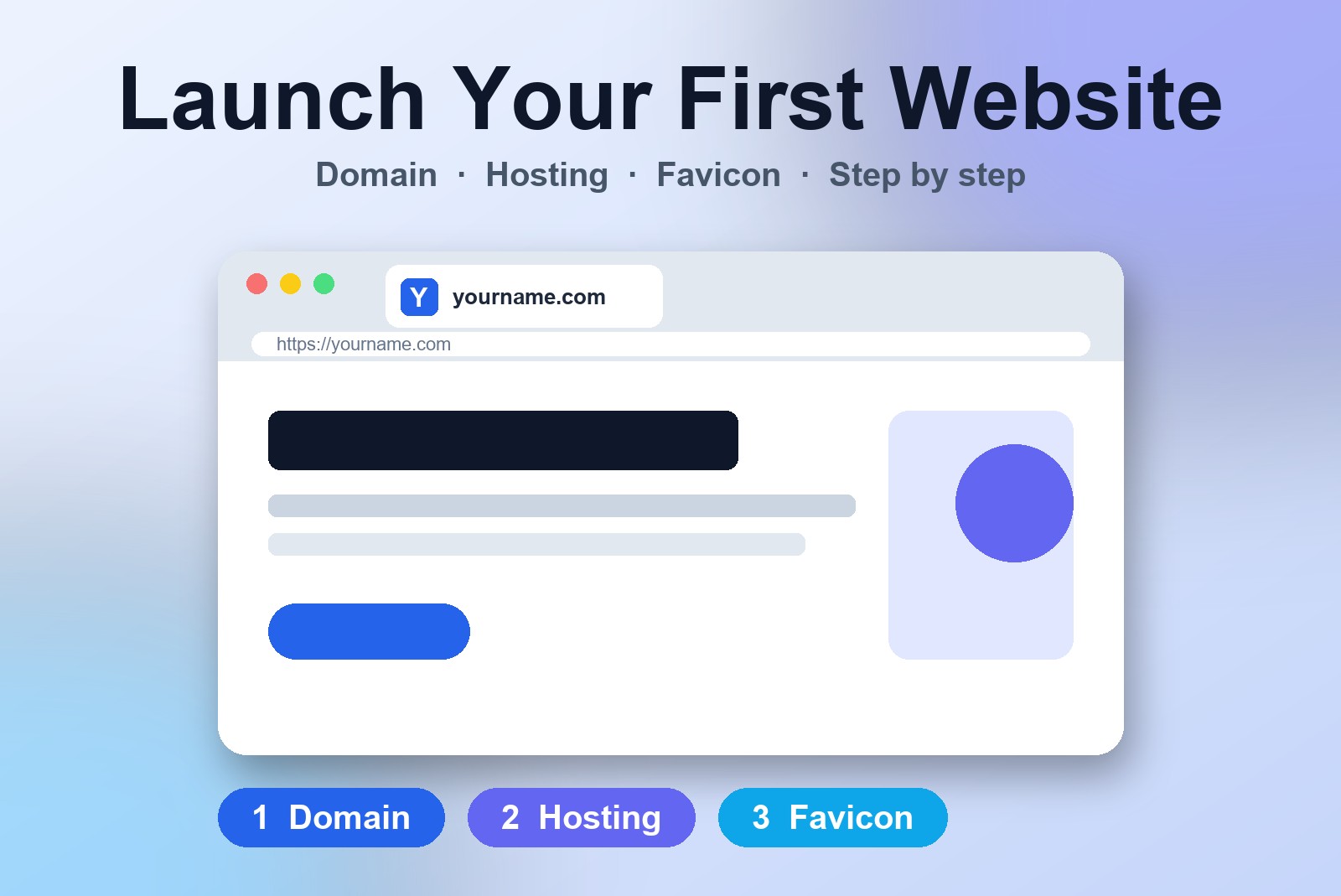
- A favicon. That tiny icon in the browser tab. Without one, your site shows a blank default, which quietly says "unfinished". Our Favicon Generator makes every size from one image, and there's a step-by-step in this guide.
- Readable colors. Pretty is nice, readable is required. The CSS & Color Tools can check whether your text stands out enough from its background.
- A QR code, if you print anything. On a flyer, a business card or a shop window, a QR code takes people straight to your site.
Launch-day checklist
- Your domain opens the site, with and without
www. - The address starts with
https, so the browser shows the lock. - Every page loads on your phone and looks right.
- The contact method actually reaches you (send yourself a test).
- The favicon shows up in the tab.
- Every link goes where it should.
- The text is proofread. Read it out loud, and you'll catch what your eyes skip.
Mistakes almost everyone makes
- Waiting for perfect. Launch the small version, then improve it. Nobody is checking your site on day one.
- Forgetting the renewal date. Domains and hosting renew on a schedule. Put a reminder in your calendar.
- Buying five things at once. Start with the basics. You can add extras later, when you know you need them.
- Never opening it as a visitor. Visit your own site on a different device now and then. It's humbling, and useful.
One honest note about this post
The Bluehost, DesignEvo and Weblium links in this post are affiliate links. If you buy through them, we may earn a commission, and it doesn't cost you anything extra. The rest of the advice works whichever way you decide to build. Full details are on our disclosure page.
FAQ
A domain name (your address), hosting (where the site lives), the pages themselves and a few finishing touches such as a favicon. A website builder with hosting included bundles the hosting and the building into one step.
The domain is the address people type. Hosting is the always-on computer that stores your site and shows it to visitors. You need both, and some providers sell them together.
It depends on the domain, the hosting or builder you pick and any extras. Prices and offers change, so check the provider's own page before you decide.
No. A website builder lets you make a site without writing code, and AI builders go a step further by generating the pages from a description. Coding only becomes useful if you want full control over every detail.
You don't need one to be online, but without it browsers show a blank default icon in the tab. A favicon takes a few minutes to add and makes the site look finished.